


Island Ductless -
December 10, 2025.png?width=690&height=542&name=Untitled%20(21).png)
Your home’s electrical system powers everything from lights to appliances, but as technology advances, older systems often struggle to keep up. To help you stay safe and avoid potential problems, we’ve outlined five key signs that it may be time for an electrical upgrade.
Frequent Circuit Breaker TripsWhy it happens: Your electrical panel may be outdated or overloaded by modern appliances and HVAC systems. Older panels often can’t handle today’s energy demands. Why it matters: Overloaded circuits can lead to overheating and increase the risk of electrical fires. In fact, electrical malfunctions cause 46,700 home fires annually in the U.S. What to do: Have a licensed electrician inspect your panel and electrical system. Upgrading to a newer/higher-capacity panel or upgrading the wiring to ensure safe, reliable power for your home. Flickering or Dimming LightsWhy it happens: When lights flicker as you turn on another appliance, it means your circuits are under strain or your wires are deteriorating. Why it matters: This is often an early warning sign of wiring issues that can lead to shocks or fires. What to do: Schedule a wiring inspection. Replacing old wires and balancing circuits can prevent hazards and improve performance. |
Quick Facts:
|
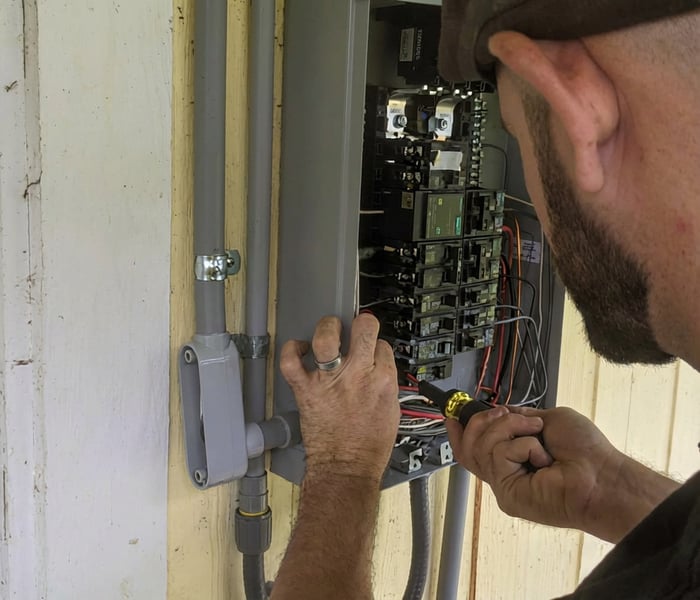
Outdated Wiring or Panels
Why it happens: Homes built before the 1980s often have panels rated 100 amps or less, while modern homes need 200 amps or more.
Why it matters: Panels older than 25-40 years may be considered high risk. Your electrician can evaluate this potential problem.
What to do: Upgrade your panel and wiring to meet today’s standards. This protects your home and ensures compatibility with modern appliances.
Warm Outlets or Switches
Why it happens: Heat around outlets or switches signals faulty wiring or overloaded circuits and can be very dangerous.
Why it matters: Overheating is a sign of an arc fault, which occurs when electricity jumps between damaged or loose wires. Arc faults produce extreme heat and are a leading cause of electrical fires in homes.
What to do: Turn off the power to the affected area and call an electrician immediately. Do not ignore this warning sign.
Lack of Ground Fault Protection
Why it happens: Older homes often lack GFCI outlets in kitchens, bathrooms, and outdoor areas.
Why it matters: Without GFCIs, you’re at a higher risk of electrocution. Did you know, GFCIs have led to an 81% drop in electrocutions since their introduction?
What to do: Have GFCI and AFCI protection installed to meet modern safety codes.
.png?width=700&height=600&name=Untitled%20(24).png)
In Closing
Electrical safety isn’t just about convenience; it’s about protecting your home and loved ones. Small issues can become major hazards. Every home is unique, and so are your needs. Let us handle the details so you can enjoy a home that’s powered for today and protected for tomorrow.
Contact us today to get started: Electrical Services | Island Ductless Heat Pumps